

Business
Mercedes E-Class, BMW 5 Series, Cadillac XT5 or similar
- 3 passengers
- 2 large, 1 cabin
- Delegates and staff movements
Events and roadshows
Multi-vehicle, multi-day ground programmes with one coordinator who answers the phone and one invoice at the end of it.
A named coordinator who knows your programme, holds the manifest and answers their phone at six in the morning on move day. The same person from proposal to final invoice.
Three vehicles in one city or two hundred across four countries, run on the same system by licensed local operators rather than assembled from strangers on the day.
One invoice for the whole programme, itemised by day, vehicle and cost centre, reconciled against the manifest rather than against a pile of separate receipts.
Event ground transportation is a coordinated programme of vehicles, chauffeurs and dispatch built around a single schedule, rather than a collection of individual bookings. RYDES plans it from your manifest: the arrivals, the venue movements, the evening functions and the departures, with one coordinator, one point of contact and one invoice.
The difference from booking transfers separately is not the vehicles, which are the same. It is that somebody holds the whole picture. When a flight lands ninety minutes late, they already know which three people were on it, which vehicle was waiting, what that vehicle was doing next, and who needs telling.
Each of these fails in a different way when it goes wrong, which is why each is planned differently rather than being treated as a pile of transfers.
| Programme | Planned around | Typical shape | Where it goes wrong |
|---|---|---|---|
| Conferences and congresses | Arrival and departure peaks | Airport shuttling plus venue and hotel movements over three to five days | Two hundred people landing in a four-hour window |
| Executive roadshows | A fixed meeting schedule | Two to six cities, small vehicle count, tight sequencing | One overrunning meeting cascading into the next city |
| Incentive travel | Group cohesion and comfort | Coaches and vans with executive cars for hosts | Groups splitting and losing their vehicle |
| Weddings | One immovable moment | Bridal party cars plus guest shuttles across two or three days | Photographs always overrun, and the schedule never allows for it |
| Film and production | Call sheets and unit moves | Crew vans, talent cars, long days, night work | Call times changing after the vehicles are committed |
| Sports and touring parties | Fixture times and kit volume | Coaches for squads, cars for staff, secure staging | Equipment volume nobody measured in advance |
| Delegations and state visits | Protocol and security | Motorcade order, cleared chauffeurs, controlled access | Route or venue changes at short notice |
| Product launches and premieres | Arrival choreography | Staged arrivals at a single entrance over a short window | Everyone arriving at once at a venue with one kerb |
Six stages between your first email and the final invoice. You are closely involved in two of them and barely present in the rest.
Cities, dates, approximate numbers and what the event actually is. A rough spreadsheet is enough to start. You do not need a finished manifest to get a proposal.
We size the fleet against the peaks rather than the totals, because two hundred people over three days is easy and two hundred people in four hours is not. You get a written plan with a fixed programme price.
Names, flights, hotels, movements. Send it in whatever format you have and we normalise it. It stays live and changes right up to the day without a new quote.
Every chauffeur receives the venue access rules, the staging point, the signage, the passenger list and the escalation number before they arrive. Nobody is finding out on the kerb.
A dispatch desk tracking every vehicle against the manifest, and from ten vehicles upward a coordinator physically on site with the staging area and the greeters.
One invoice, itemised by day, vehicle and cost centre, checked against what actually ran rather than against what was originally planned.
The constraint is almost never price. It is whether enough licensed vehicles and cleared chauffeurs exist in that city on that date.
| Programme size | Notice we need | Coordination | Also provided |
|---|---|---|---|
| 1 to 3 vehiclesOne city, one or two days | 48 hours | Named contact, remote | Consolidated invoice |
| 4 to 10 vehiclesOne or two cities | 1 week | Named coordinator, remote dispatch desk | Manifest management, driver briefing packs |
| 11 to 30 vehiclesMulti-day | 3 weeks | Coordinator on site for peak movements | Staging area, greeters, signage, standby vehicle |
| 31 to 100 vehiclesCongress or festival scale | 6 weeks | On-site team throughout, dedicated dispatch | Multiple staging points, radio comms, standby fleet |
| Over 100 vehiclesOr multi-country | By discussion | Programme manager plus regional coordinators | Site survey, rehearsal, contingency fleet |
Shorter notice is often possible and we will always try. What we will not do is accept a programme we cannot properly resource and discover it on the morning. If the dates are tight, tell us anyway and we will tell you honestly what is achievable.
The roadshow is the hardest format we run, and the smallest. Six people, one car per city, and a schedule where a missed connection does not cost an hour, it costs a meeting that took two months to arrange.
Every leg is planned backwards from the meeting, not forwards from the last one. Vehicles are held at each end rather than booked on arrival, the same coordinator holds all four cities, and when the second meeting overruns they are already moving the third city's car before anyone has called them.
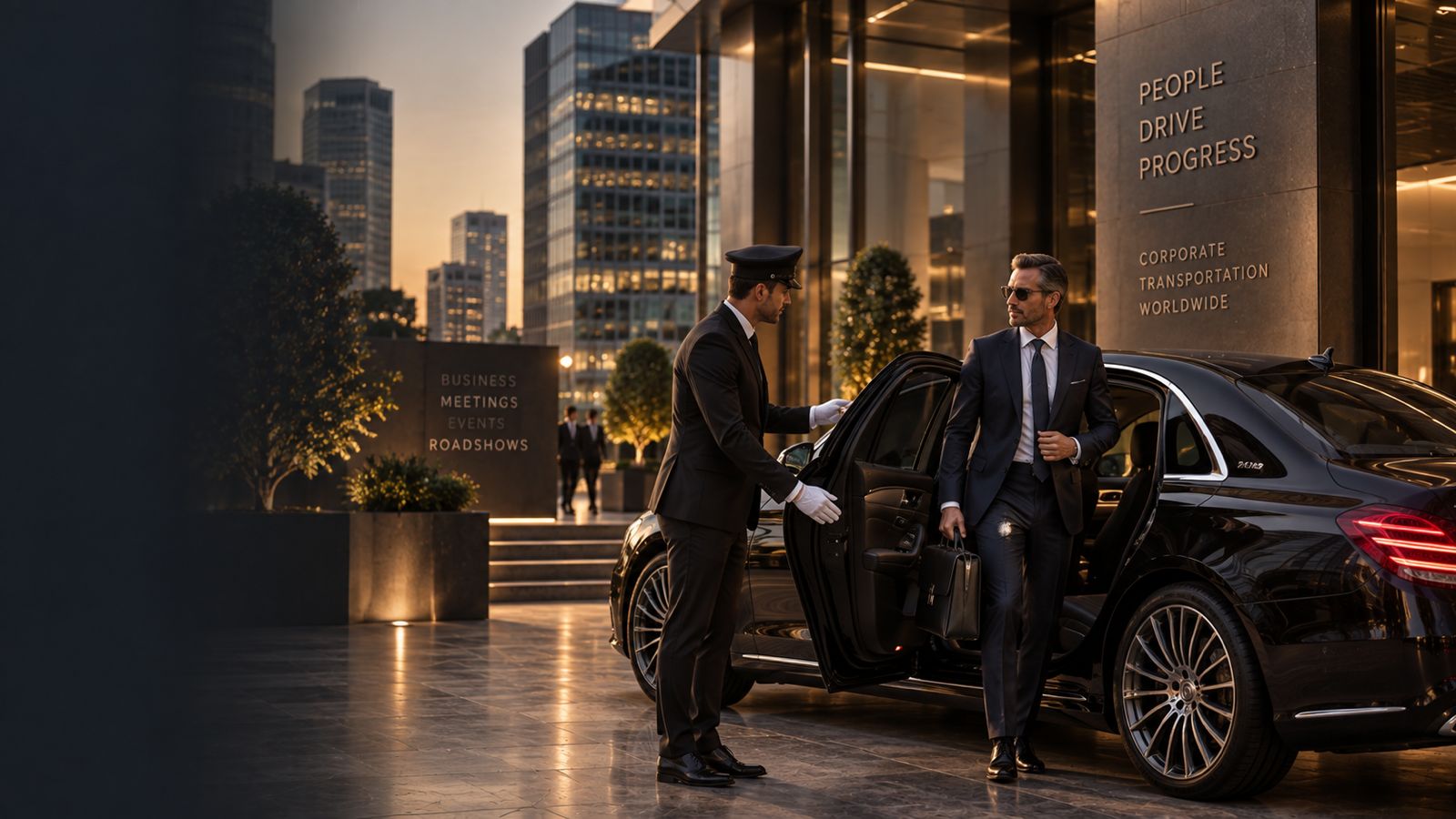
Most of this is invisible if it works, which is the point. It is also the entire difference between a programme and a stack of bookings.
Every vehicle tracked live against the manifest, so a delay is noticed by us before it is noticed by you. Your coordinator sees the whole board rather than one ride at a time.
Venues rarely have room for eleven cars at the entrance. Vehicles wait at an agreed staging point and are called forward individually, which is what stops the kerb becoming the problem.
Named greeters at arrival points with your programme's signage rather than ours, directing guests to the right vehicle without them needing to know a registration plate.
Access route, staging point, passenger list, dress code, escalation number. Issued before the day, not explained at the gate.
From eleven vehicles upward, a spare car is held in the plan. Something always happens; the question is only whether there is capacity to absorb it.
People miss flights, add guests and change hotels. Send the change to your coordinator and the plan updates. It does not require a new quote or a new booking.
Reachable throughout the programme and answered by someone who already knows what your event is, rather than by a general support queue.
After the programme, what ran, what changed and what it cost, reconciled against the manifest. Useful next year, and useful for finance now.
Event fleets are almost always mixed. Cars for principals, vans for groups, coaches for volume, and one spare that you hope stays parked.
Mercedes E-Class, BMW 5 Series, Cadillac XT5 or similar
Mercedes S-Class, BMW 7 Series, Audi A8 or similar

Tesla Model S, Mercedes EQE, BMW i5 or similar

Cadillac Escalade, Chevrolet Suburban, Mercedes GLS or similar

Mercedes V-Class, Mercedes Vito, Ford Transit or similar
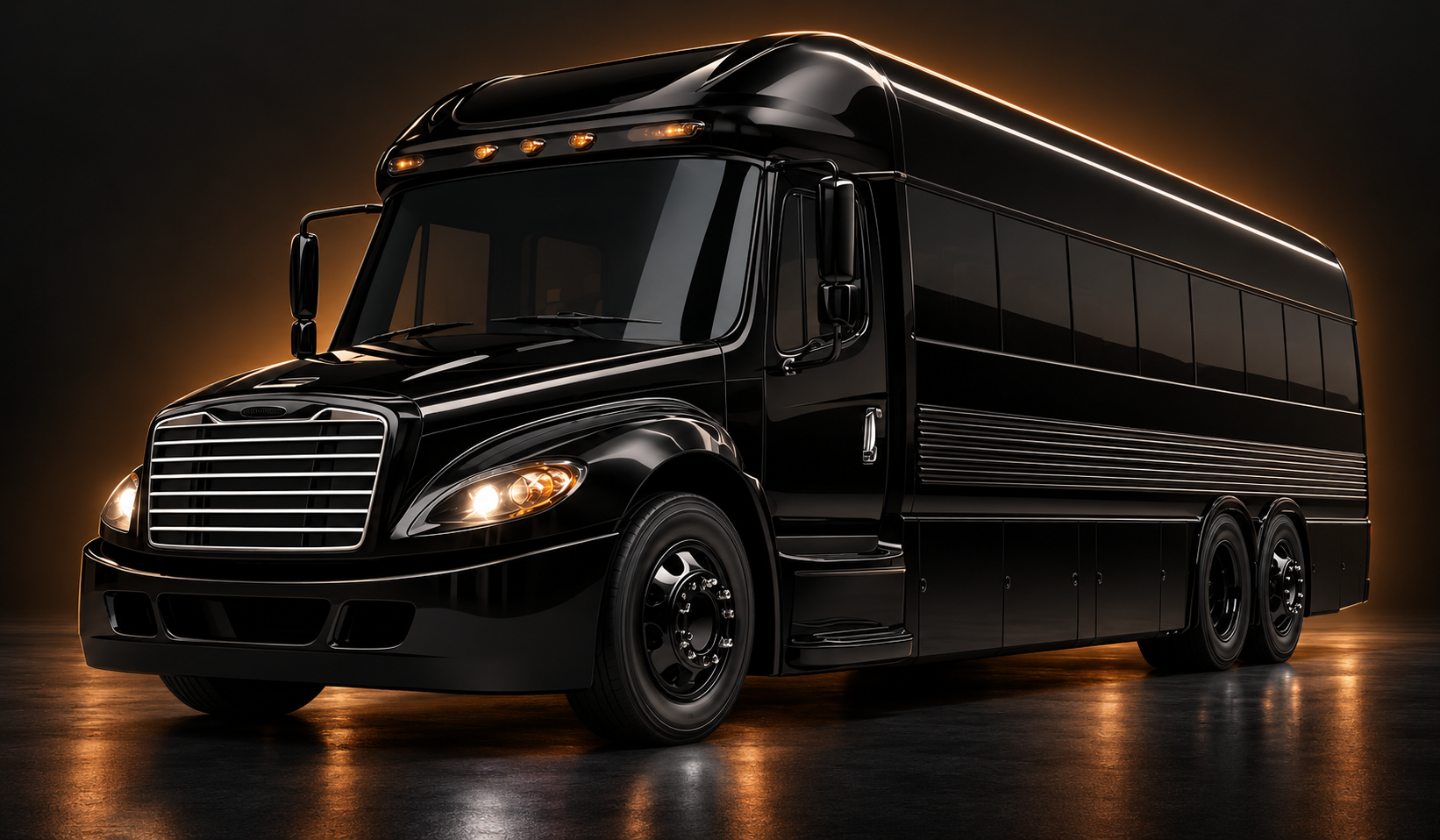
Mercedes Sprinter, executive minibus, mini coach
| Class | Passengers | Large cases | Used for |
|---|---|---|---|
| Business | 3 | 2 | Delegates, staff, general movements |
| First | 3 | 2 | Principals, keynote speakers, hosts |
| Electric | 3 | 2 | Programmes with a stated sustainability commitment |
| SUV | 5 | 5 | Security details, camera and equipment moves |
| Van | 7 | 7 | Small groups, crew, production units |
| Group and coach | Up to 16, then coaches | By arrangement | Shuttles, squads, guest transfers at volume |
Every wedding schedule is written as though they will not, and every wedding runs late in the same place. We plan the guest shuttles with that hour already inside them, because the alternative is eighty people standing outside a church.
Bridal party cars are held for the whole day rather than booked as transfers, so nothing has to be rebooked when the timeline moves. Guest shuttles run in loops against a hotel list. And your coordinator talks to your planner, not to you, on the day itself.
Event work is quoted rather than instant-priced, and the proposal states all of this in writing before you commit to anything.
| Inside the programme price | Quoted separately when it applies | |
|---|---|---|
| Vehicles and chauffeurs | Every vehicle in the agreed plan, for the agreed hours | Additional vehicles added after the plan is signed |
| Road costs | Fuel, tolls, congestion charges, parking | Venue or campus access permits where a site charges for them |
| Coordination | Named coordinator, dispatch desk, driver briefings | On-site team beyond the hours in the plan |
| On-site presence | Coordinator on site from 11 vehicles upward | Additional greeters, branded signage, radio equipment |
| Standby capacity | One spare vehicle from 11 upward | A larger contingency fleet if you want one |
| Chauffeur costs | Wages, gratuity, breaks, local travel | Overnight accommodation on out-of-region programmes |
| Clearance | Standard licensing, insurance and background checks | Enhanced security vetting or accreditation for a specific site |
| Administration | Manifest management, one invoice, written debrief | Bespoke reporting formats or client system integration |
Gratuity is inside the price on every programme. Nobody on your event will be asked for a tip and no chauffeur will expect one.
| Add-on | Price | What you get |
|---|---|---|
| Meet and greet | $50 | At airports and cruise terminals, the chauffeur parks, walks in and waits holding a sign, then takes the luggage from there. Without it, guests are collected kerbside at no charge. |
| Child or booster seat | $20 per seat | Supplied ready in the vehicle. You fit them. Give ages and weights on the manifest so the correct seats are used. |
| Travelling with a pet | $20 cleaning fee | Non-service animals travel in a suitable crate or carrier where the operator accepts them. The fee covers cleaning afterwards. Service animals travel free, always. |
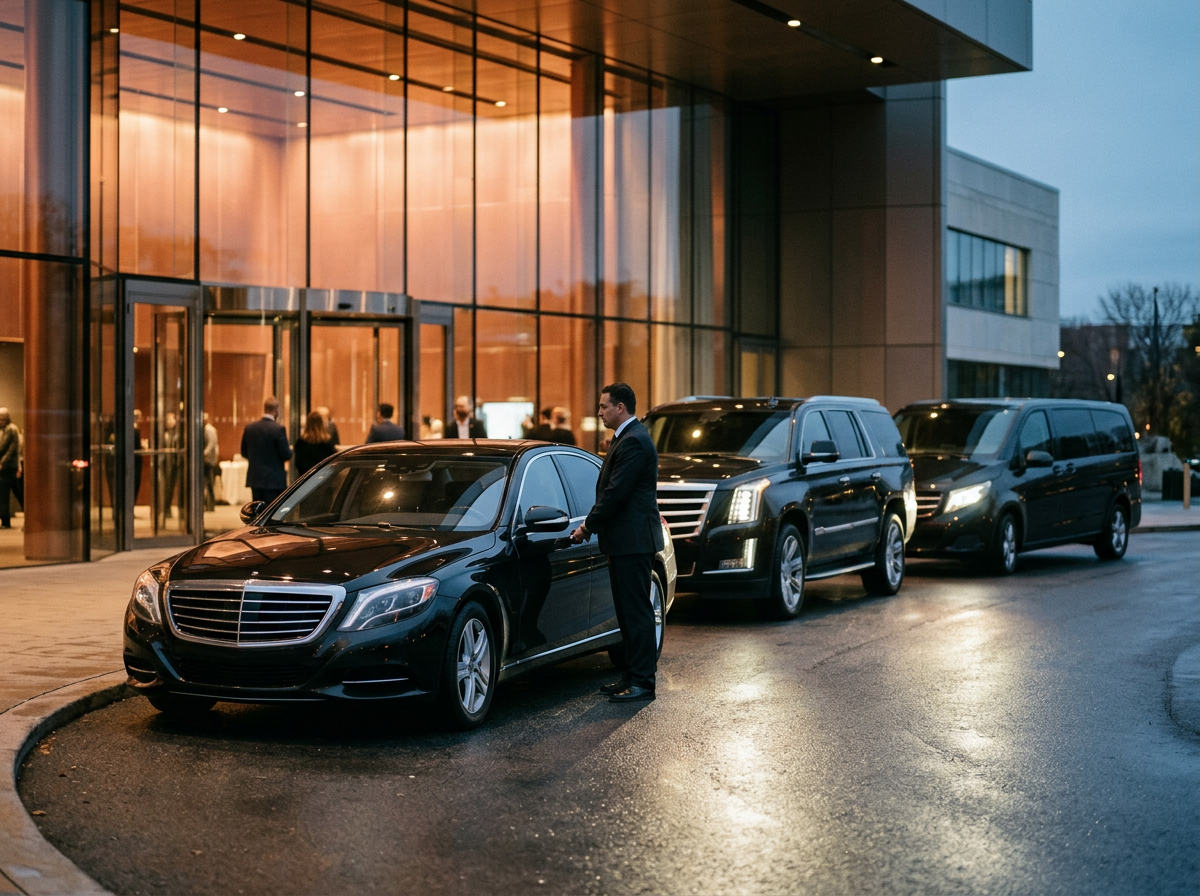
Above ten vehicles, remote dispatch stops being enough. Venues have one usable entrance, security move the drop-off point without telling anyone, and a coach parked in the wrong place blocks everything behind it for twenty minutes.
So from eleven vehicles up, a coordinator is physically there. They hold the staging area, call cars forward one at a time, brief the greeters and talk to the venue's own security directly. That role is inside the programme price rather than an upsell, because without it the plan is theoretical.
Each of these takes time to arrange properly and cannot be improvised once the programme is running.
Enhanced vetting, accreditation for a specific site, or chauffeurs cleared to a client standard. This takes weeks rather than days, so it needs to be in the brief rather than the manifest.
NDAs can be executed with the operators and their chauffeurs where a programme requires it. Confidentiality is already a condition of being on the network, but some clients need it in writing.
Certificates of insurance, operating licences and compliance documentation for your venue or your own risk team, provided per operator and per market.
Greeter boards and vehicle signage in your event's identity rather than ours. Artwork needs to reach us with the vehicle plan, not with the manifest.
Wheelchair-accessible vehicles and additional assistance are available in most markets but are genuinely limited in supply. Flag numbers at the brief stage so capacity is held.
We work alongside event agencies, DMCs and production companies rather than around them. Your coordinator will talk to your producer and leave you out of it entirely if that is what you want.
One plan, one invoice, one currency of your choosing, across as many countries as the event touches. Regional coordinators report into a single programme manager.
Electric vehicles where the market supports them, and a written summary of the programme's ground transport emissions for your event reporting.
For a proposal, write to reserve@rydes.co or call +1 888 881 7933.
Event ground transportation is a coordinated programme of vehicles, chauffeurs and dispatch built around a single schedule rather than a collection of individual bookings. It is planned from a manifest covering arrivals, venue movements, functions and departures, and delivered with one coordinator, one point of contact and one invoice.
48 hours for one to three vehicles, a week for four to ten, three weeks for eleven to thirty, and six weeks above that. The constraint is rarely price; it is whether enough licensed vehicles and cleared chauffeurs exist in that city on that date. Shorter notice is often possible, and we will tell you honestly what is achievable rather than accept a programme we cannot resource.
There is no fixed ceiling. Programmes above 100 vehicles or spanning multiple countries are planned with a programme manager and regional coordinators, and usually include a site survey and a rehearsal. Below that, capacity is a question of notice rather than possibility.
From eleven vehicles upward, yes, and it is inside the programme price rather than an extra. A coordinator holds the staging area, calls vehicles forward individually, briefs the greeters and deals directly with venue security. Below eleven vehicles, coordination is remote through a named contact and a dispatch desk.
Send it in whatever format you already have and we normalise it. It stays live and can change up to and during the event without a new quote, so people missing flights, adding guests or changing hotels is handled as an update rather than a rebooking.
Every arrival is flight-tracked individually, exactly as a standard airport transfer is, and the dispatch desk sees all of them against the manifest at once. When something moves, your coordinator already knows who was on it, which vehicle was waiting and what that vehicle was due to do next.
As a fixed programme price agreed in a written proposal before anything is committed. It is built from the vehicle plan rather than from a per-ride rate, and it includes fuel, tolls, parking, taxes, gratuity, coordination and the standby capacity in the plan. Items quoted separately are listed explicitly in the proposal.
One spare vehicle is held in the plan from eleven vehicles upward, inside the programme price. A larger contingency fleet can be quoted where the programme warrants it. Something always happens on an event; the only question is whether there is capacity to absorb it.
Yes. One plan, one invoice and one currency of your choosing across as many markets as the event touches. Regional coordinators report into a single programme manager, so you still have one person to call regardless of which city the problem is in.
Yes, and we would rather. Your coordinator works directly with your producer, agency or DMC and can keep you out of the operational conversation entirely if that is what you want. We are the ground transport supplier, not a competitor to your planner.
In most markets, yes. Enhanced vetting, site-specific accreditation and clearance to a client standard are all possible but take weeks rather than days, so they need to be raised at the brief stage. Standard licensing, insurance and background checks apply to every chauffeur on the network as a condition of being on it.
Yes. Confidentiality agreements can be executed with the operators and their chauffeurs where a programme requires it. Confidentiality is already a condition of network membership, but some clients need it in writing and that is straightforward to arrange.
Greeter boards and vehicle signage can carry your event identity rather than ours. Artwork needs to reach us with the vehicle plan rather than with the manifest, because it has to be produced and distributed to every operator before the first movement.
Certificates of insurance, operating licences and compliance documentation, provided per operator and per market for your venue or your own risk team. Tell us at the brief stage which documents your organisation requires so they are collected before the programme rather than chased during it.
One invoice for the whole programme, itemised by day, vehicle and cost centre, reconciled against what actually ran rather than what was originally planned. A written debrief accompanies it covering what ran, what changed and what it cost.
Tell your coordinator. That is the entire reason they exist. Movements, timings and passenger lists can change throughout the programme, and the plan updates around them. Changes that add vehicles beyond the signed plan are quoted before they are actioned rather than appearing on the invoice.
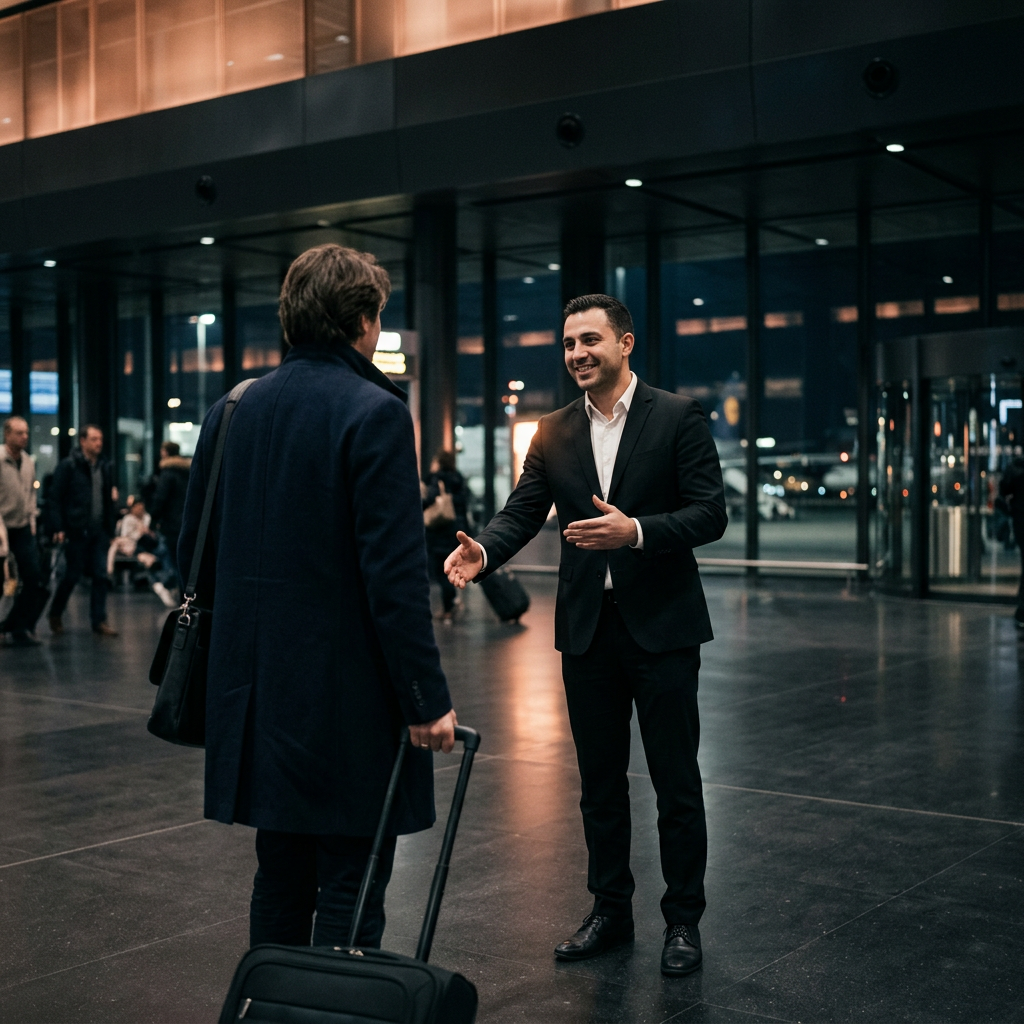
Events and roadshows are one of five ways to travel with RYDES.
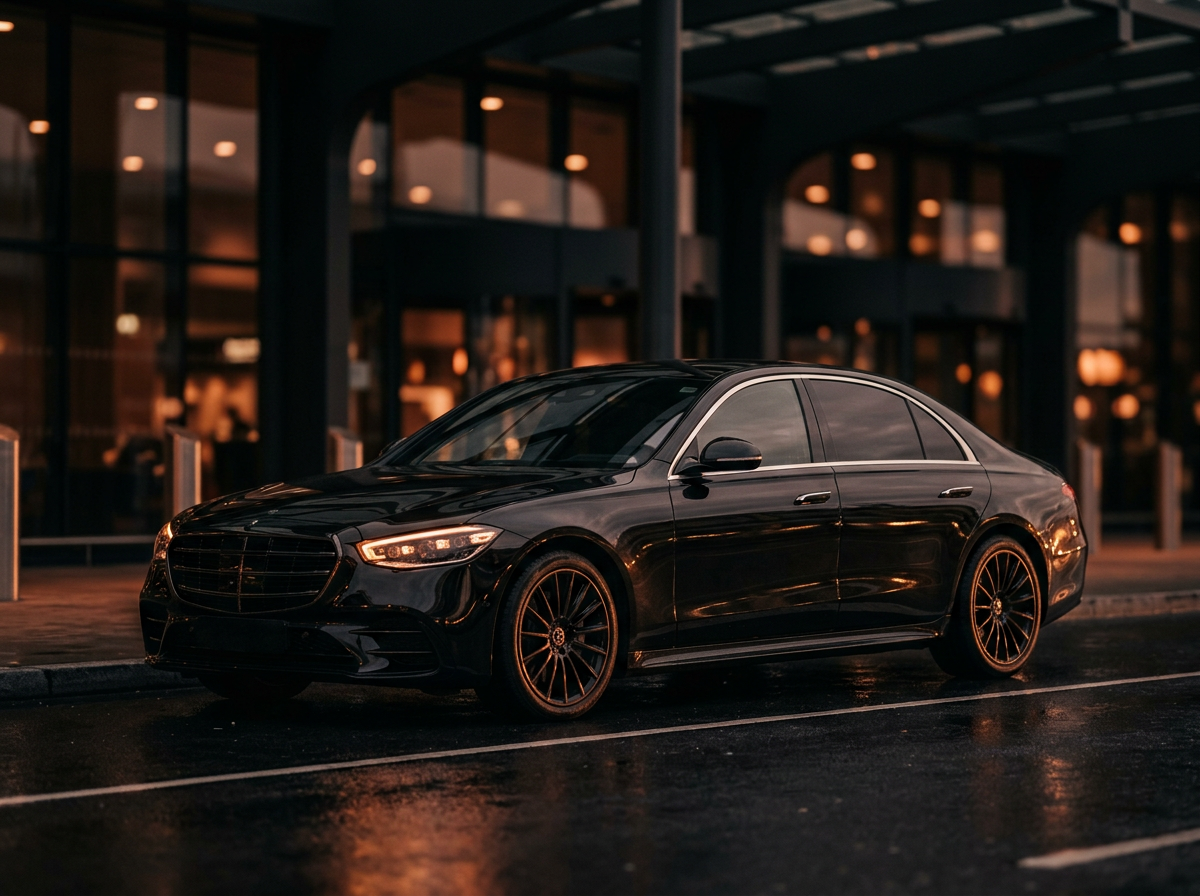
Delegate arrivals, individually flight-tracked, with sixty minutes of free waiting from actual landing.
Airport transfers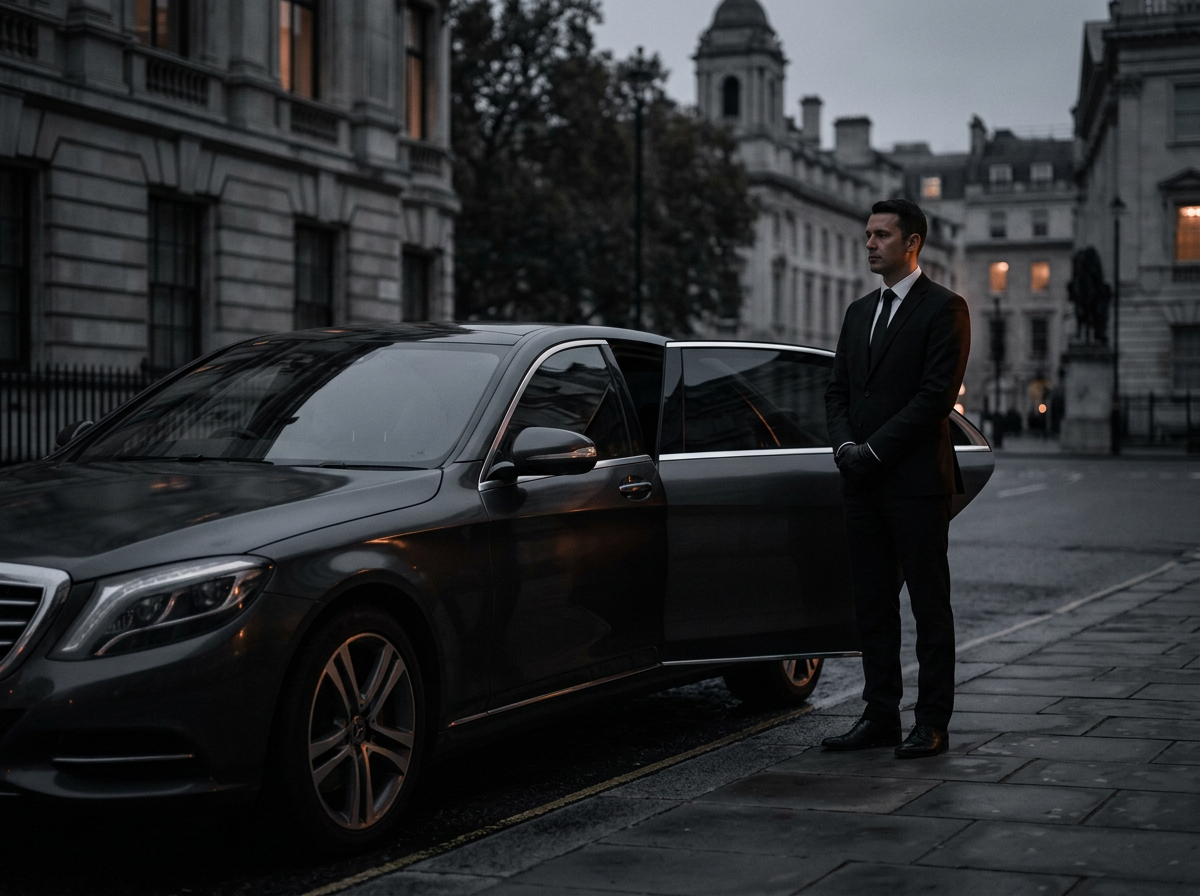
The right format for principals and hosts who need a car held for a whole day rather than moved between bookings.
Hourly hire
Roadshow legs between cities, door to door, with the luggage never leaving the vehicle.
Intercity ridesA rough outline is enough to start. Cities, dates, approximate numbers, and what the event actually is.